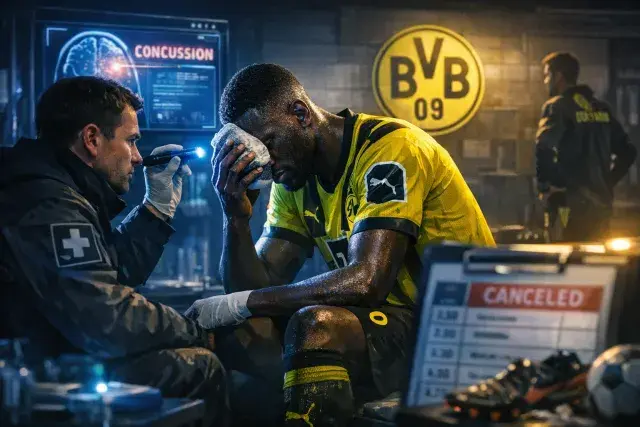
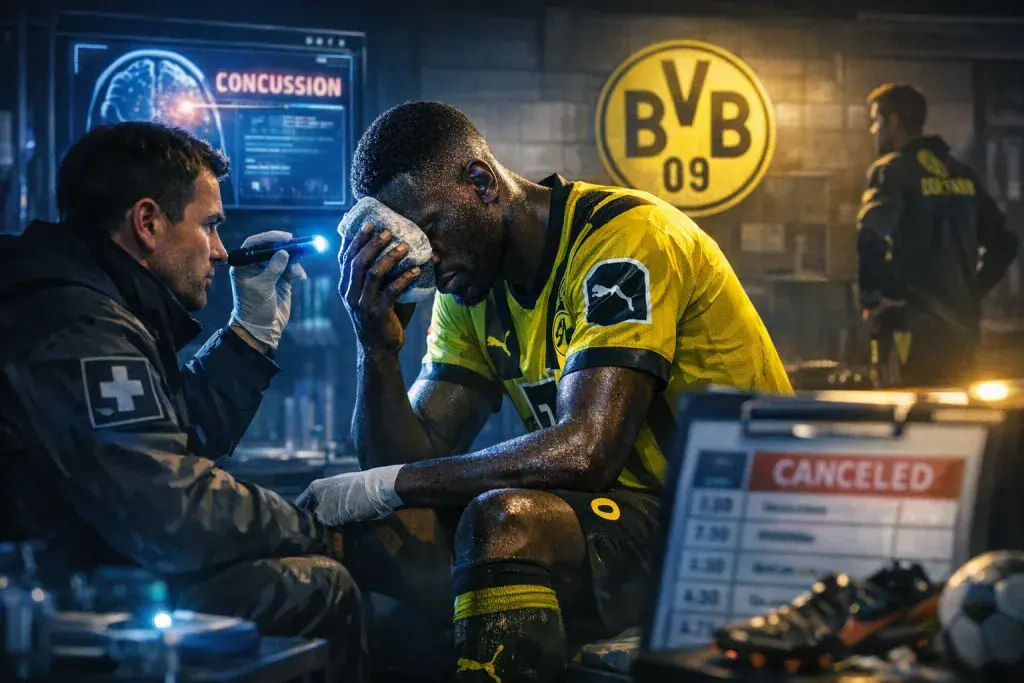
Serhou Guirassy, Borussia Dortmund's key forward with 19 goals and six assists this season, sustained a concussion in their recent 1-2 loss to Hoffenheim, casting serious doubt on his availability for Saturday's home clash against Freiburg. The injury, diagnosed post-match after a collision in his own penalty area, has sidelined him from training, with a decision pending later this week. Beyond the immediate concern, the club is abandoning a planned 2026/27 pre-season camp due to an overloaded international calendar, prioritizing recovery for players involved in major global events.
Concussion Risks Demand Cautious Management
Guirassy's injury occurred in the 84th minute when Hoffenheim's Ozan Kabak challenged him during a defensive clearance, resulting in no foul call but significant after-effects. Concussions involve brain trauma from impact, leading to symptoms like headache, dizziness, and cognitive disruption that can persist. Medical protocols emphasize rest to allow neural recovery, explaining Dortmund's decision to hold him out of sessions; rushing back risks prolonged impairment or secondary injury. His contributions highlight the stakes, as his output has driven much of the team's offensive thrust this campaign.
Compressed Calendars Force Schedule Revisions
Dortmund's shift away from a traditional summer training camp for 2026/27 stems from the 2026 World Cup's timing, which squeezes recovery periods for international participants. Club policy mandates at least three weeks off post-tournament elimination, yet the subsequent season demands immediate readiness, creating a narrow window for reintegration. Instead of a 2025 camp in Saalfelden, Austria, preparations will rely on in-house facilities and a late-July Asia tour, aiming to mitigate fatigue accumulation. This adjustment reflects broader pressures from expanded international commitments that shorten off-seasons across elite levels.
Implications for Preparation and Performance
A potential Guirassy absence tests Dortmund's depth ahead of fixtures including May 3 at Mönchengladbach and May 8 against Frankfurt. Without him, attacking cohesion could suffer, underscoring reliance on individual output amid squad transitions. The scrapped camp signals proactive adaptation to fixture congestion, potentially preserving player longevity but challenging team-building rhythms. Such changes highlight tensions between domestic demands and global events, influencing how clubs balance intensity with sustainability.